
The NIH has paused clinical trials for 3K3A-APC, a stroke drug candidate sponsored by ZZ Biotech, a Texas-based company co-founded by Berislav V. Zlokovic, M.D., professor and chair of the department of physiology and neuroscience at the Keck School of Medicine of USC. Imagine being killed by a fake drug because a physician falsified his data – evidence suggests that happened in a clinical trial sponsored by ZZ Biotech of Houston, Texas.
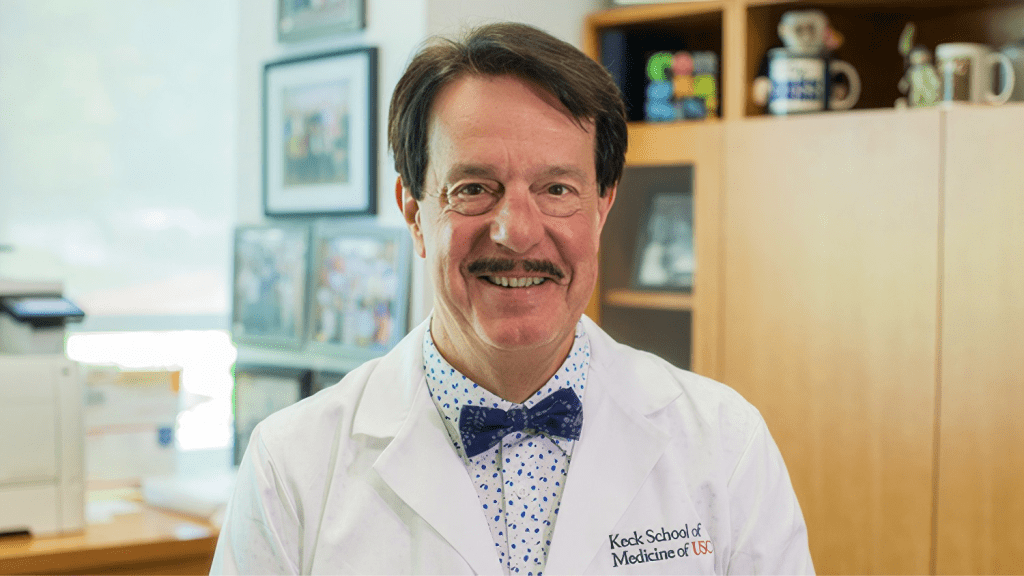
Berislav Zlokovic, dressed in his medical grade bowtie and white jacket, has a medical degree from the University of Belgrade and currently practices medical fraud at USC.
The LA Times has updated the case against physician fraudster, Berislove Zlokovic. Three of Zlokovic’s research papers have been retracted by the journal that published them because of problems with their data or images. Journals have issued corrections for seven more papers in which Zlokovic is the only common author, with one receiving a second correction after the new supplied data were found to have problems as well. An 11th paper co-authored by Zlokovic the journal Nature Medicine issued an expression of concern, a note journals append to articles when they have reason to believe there may be a problem with the paper but have not conclusively proven so. Since Zlokovic and his co-authors no longer had the original data for one of the questioned figures, the editors wrote, “[r]eaders are therefore alerted to interpret these results with
Late last year, a group of whistleblowers submitted a report to the National Institutes of Health that questioned the integrity of a celebrated USC neuroscientist’s research and the safety of an experimental stroke treatment his company was developing.
The whistleblower report submitted to NIH identified allegedly doctored images and data in 35 research papers in which Zlokovic was the sole common author. The LA Times reports that, “Both Zlokovic and representatives for USC declined to comment, citing an ongoing review initiated in the wake of the allegations, which were first reported in the journal Science.”
For many years, scientists have tried to reduce the brain cell death, bleeding, and inflammation that can follow a stroke, some of which results from disruption of the blood-brain barrier—a system of tiny blood vessels that delivers oxygen and nutrients but shields the brain from toxic substances. tPA, the only approved stroke drug in the United States and Europe, can vastly reduce death and disability by clearing a stroke’s blockage, but the drug, too, can cause dangerous brain bleeding. 3K3A-APC could help mitigate such damage and prevent brain cells from dying, ZZ Biotech said.
Because of its potential to address an unmet medical need, the U.S. Food and Drug Administration (FDA) gave the compound “fast track” status, with the prospect of “accelerated approval and priority review.”.
But a 113-page dossier obtained by Science from a small group of whistleblowers paints a less encouraging picture. The dossier, which they submitted to NIH, highlights evidence from the phase 2 trial that the experimental remedy might have actually increased deaths in the first week after treatment: Six of the 66 stroke patients who received 3K3A-APC died within this period, compared with one among 44 in the placebo group, although the death rate evened out after a month. Patients who received the drug also trended toward greater disability and dependency at the end of the trial, 90 days after treatment.
Deepening the concern, the dossier also highlights evidence that dozens of papers from Zlokovic’s lab—including many supporting the idea that the compound was ready for human testing—contain seemingly doctored data that suggest scientific misconduct. The whistleblowers say apparent changes to images used for protein identification and other purposes seem to skew results in favor of the scientist’s hypotheses, which include influential ideas about the blood-brain barrier and its role in stroke and Alzheimer’s disease, as well as how 3K3A-APC supposedly affects it.
 Stem Cells, Health, Technology